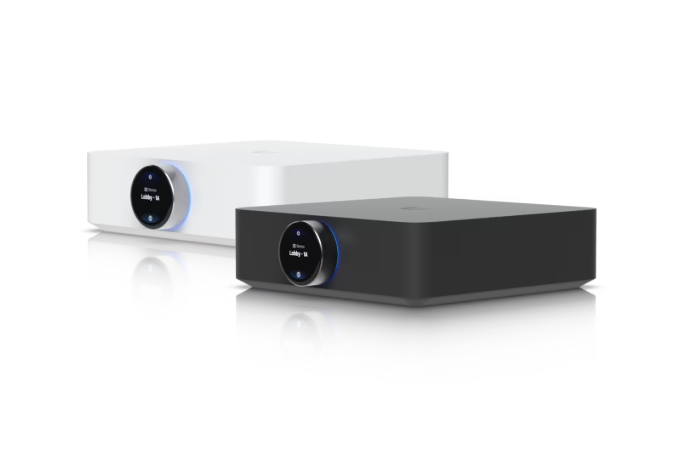
The smart home revolution is no longer just a futuristic concept; it’s happening today. The global smart home automation market reached an impressive $73.7 billion in 2024 and is projected to grow at 13.7% annually to reach $254.3 billion by 2034. In the United States alone, household penetration of smart home devices stands at 77.6% in 2025 and is expected to reach 92.5% by 2029. These numbers reflect a fundamental shift in how we interact with our living spaces, driven by advances in artificial intelligence, the Internet of Things (IoT), and increasingly affordable technology.
Home automation does more than provide convenience; it offers tangible benefits in security, energy efficiency, and quality of life. According to research, installing smart devices in your home can increase its resale value by up to 5%. Whether you’re building a new home or upgrading your existing space, understanding which automation features deliver the most value helps you make informed decisions about your investment.
This comprehensive guide explores the ten most essential connected home features that transform houses into intelligent, responsive living environments. From voice-controlled systems to advanced security solutions, each feature represents a practical step toward creating a safer, more efficient, and more comfortable home.
Understanding Smart Home Automation in 2025:
Before diving into specific features, it’s important to understand what home automation actually means. Smart home automation refers to networked devices and systems that can be controlled, monitored, and automated through internet connectivity. These devices communicate with each other and with you through smartphones, tablets, voice assistants, or automated routines.
The key difference between simply having “smart devices” and true home automation lies in integration and automation. A smart thermostat you control manually is convenient, but a thermostat that learns your schedule, adjusts based on occupancy, and coordinates with your smart blinds to optimize energy use represents genuine automation.
Top 10 Smart Home Automation Features You Need:
1. Voice-Activated Control Systems:

Voice control has become the cornerstone of modern smart homes, providing hands-free convenience that makes technology accessible to everyone in the household. Systems powered by Amazon Alexa, Google Assistant, or Apple’s Siri allow you to manage lighting, temperature, entertainment, and security with simple spoken commands.
Key Benefits:
- Hands-Free Convenience: Control devices while cooking, carrying items, or when mobility is limited.
- Universal Accessibility: Makes connected technology usable for children, elderly family members, and those with physical disabilities.
- Multi-Device Coordination: Issue a single command to control multiple systems simultaneously.
- Natural Language Processing: Modern systems understand context and complex requests, not just rigid commands.
Real-World Application:
Imagine arriving home with your hands full of groceries. A simple “Hey Google, I’m home” command can unlock your door, turn on pathway lighting, adjust the thermostat to your preferred temperature, and start playing your favourite music all without touching a single device.
Voice assistants have evolved significantly beyond basic commands. They now support complex routines, contextual understanding, and even predictive responses based on your habits. For instance, asking “What’s the weather?” in the morning might automatically trigger your coffee maker if you’ve set up that routine.
2. Intelligent Lighting Control:

While voice control offers convenience, lighting systems are equally transformative in creating efficient and personalised living spaces. Smart lighting goes far beyond turning lights on and off from your phone. Modern intelligent lighting systems adapt to your routines, optimize energy consumption, and even support your health through circadian rhythm synchronisation.
Key Benefits:
- Automated Scheduling: Lights adjust automatically based on time of day, sunrise/sunset, or your location.
- Occupancy Detection: Rooms light up when you enter and dim when empty, eliminating wasted energy.
- Scene Creation: Set multiple lighting configurations for different activities (movie night, dinner party, work mode).
- Color Temperature Adjustment: Warm light in evening promotes relaxation; cool light during day enhances focus.
- Energy Monitoring: Track consumption and identify opportunities to reduce electricity costs.
Energy Saving Impact:
Smart lighting systems can reduce energy consumption by up to 40-60% compared to traditional lighting. Motion sensors ensure lights are never left on in empty rooms, while dimming capabilities reduce power draw during times when full brightness isn’t needed.
3. Advanced Security & Surveillance Systems:
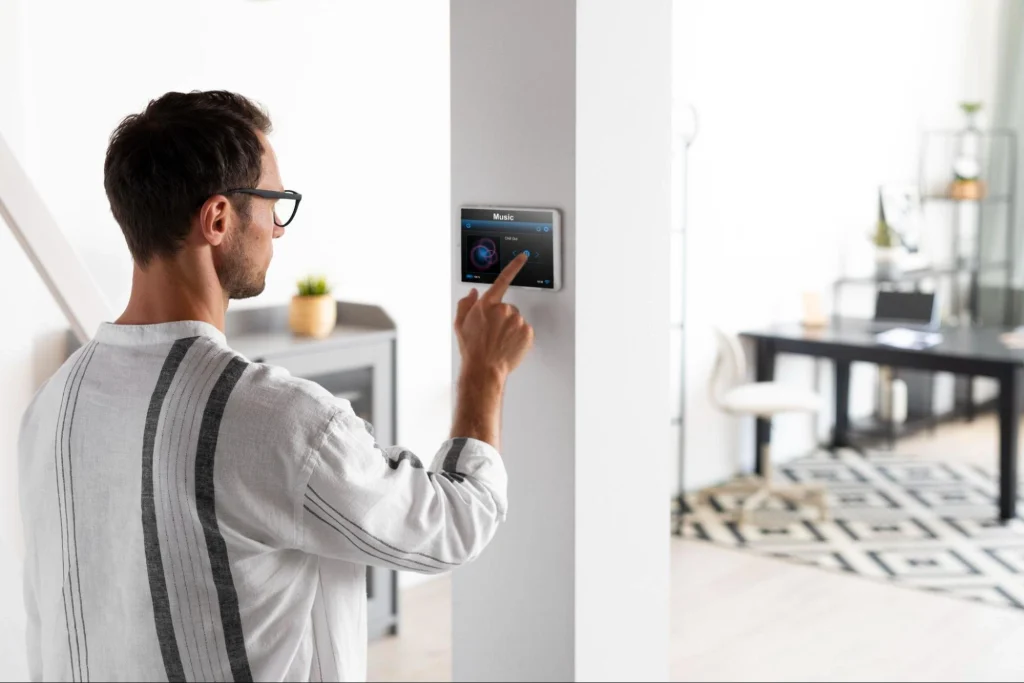
Next, let’s dive into how smart homes also enhance security. Home security has evolved dramatically with connected technology, moving from simple alarm systems to comprehensive, AI-powered surveillance networks that provide real-time awareness and intelligent threat detection.
Core Components:
- Smart Cameras with AI Detection: Distinguish between people, animals, vehicles, and packages to reduce false alarms.
- Facial Recognition: Identify known family members versus strangers approaching your property.
- Real-Time Alerts: Instant notifications with video clips sent directly to your smartphone.
- Two-Way Audio: Communicate with visitors or potential intruders from anywhere.
- Cloud Storage & Local Backup: Secure footage storage with redundant backup systems.
- Integration with Emergency Services: Automatic alerts to authorities during confirmed security events.
Security Statistics:
Safety and security devices saw the most significant growth of 151% from 2019-2023 among smart home categories, reflecting homeowners’ growing prioritization of protection and peace of mind.
4. Smart Thermostats & Climate Control:
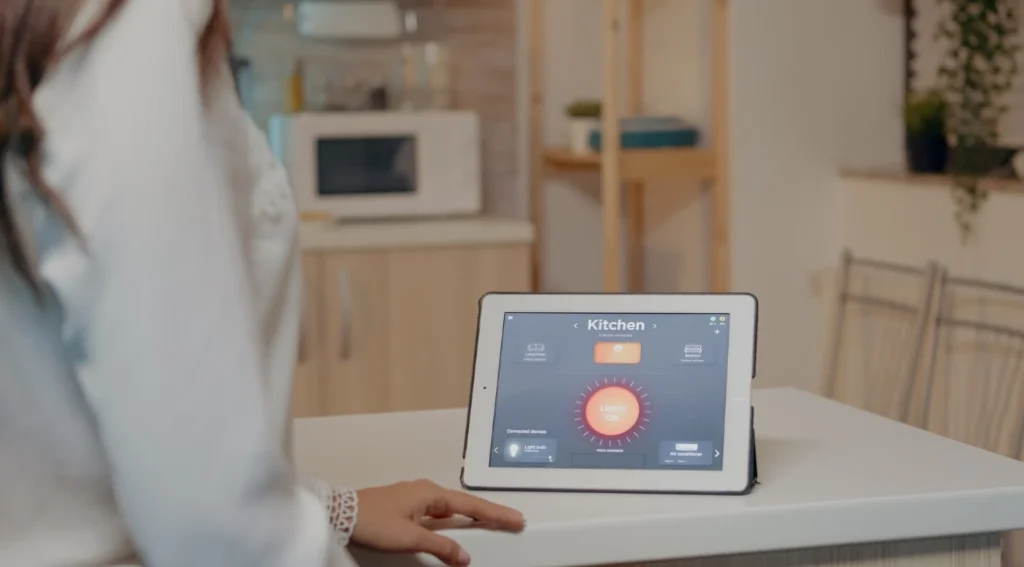
Heating and cooling typically account for nearly half of a home’s energy costs, making smart thermostats one of the most financially impactful automation features you can install.
Advanced Features:
- Learning Algorithms: AI studies your preferences and schedule to automatically optimize temperature settings.
- Geofencing Technology: Detects when you leave or approach home to adjust climate accordingly.
- Room-by-Room Zoning: Individual temperature control for different areas based on occupancy and preference.
- Weather Integration: Anticipates temperature changes and adjusts proactively.
- Energy Reports: Detailed analysis of consumption patterns with recommendations for savings.
- Remote Access: Adjust temperature from anywhere via smartphone app.
Proven Energy Savings:
Smart thermostats like the Google Nest can reduce electricity bills significantly through intelligent climate management. Users typically report energy savings between 10-23% on heating and cooling costs, which translates to hundreds of dollars annually.
Integration Opportunities:
Smart thermostats work best when integrated with other home systems. They can coordinate with smart blinds to block afternoon sun, work with ceiling fans to distribute air more efficiently, and adjust based on occupancy detected by your security system.
5. Automated Door Locks & Access Control:
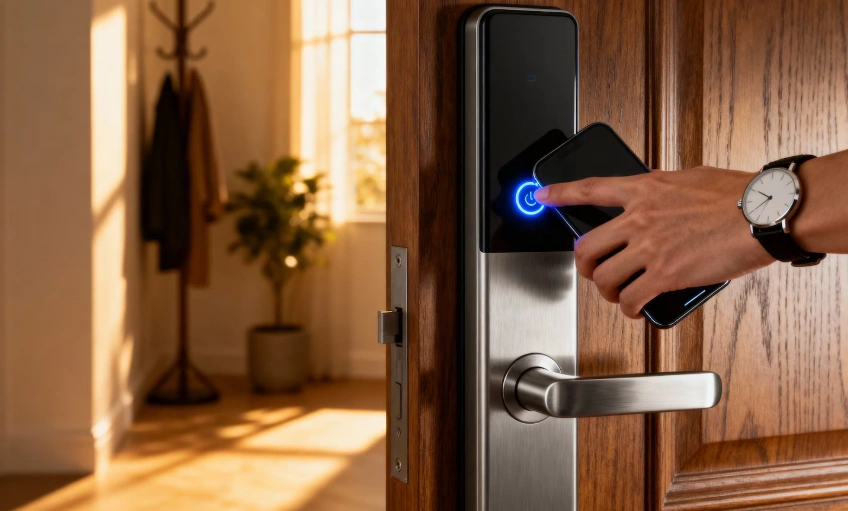
Smart locks eliminate the need for physical keys while providing unprecedented control over who enters your home and when. This feature combines security, convenience, and complete access visibility.
Key Capabilities:
- Multiple Entry Methods: Unlock via smartphone, PIN code, fingerprint, key fob, or voice command.
- Temporary Access Codes: Create time-limited codes for guests, contractors, or service providers.
- Entry Logs: Complete record of who entered your home and when.
- Auto-Lock Features: Doors automatically lock after a set period or when you leave the geofence.
- Remote Unlocking: Let family members or trusted individuals in remotely if needed.
- Integration with Security: Coordinate with cameras to capture video when door is accessed.
Security Enhancement:
Traditional keys can be copied, lost, or stolen. Smart locks provide accountability through detailed logs and can immediately be reprogrammed if access needs to be revoked, eliminating the need to rekey your entire home.
6. Smart Home Entertainment Systems:
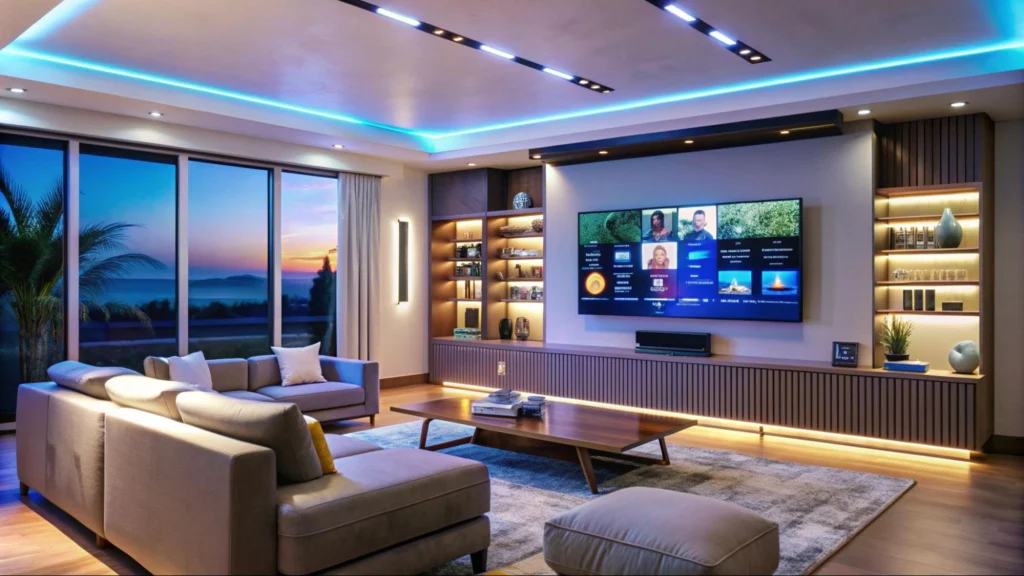
Entertainment automation transforms how you experience media, creating cinema-quality experiences, whole-home audio, and seamless device integration that responds to your preferences.
System Components:
- Multi-Room Audio: Synchronized music throughout your home or independent control per room.
- Voice-Controlled Media: Request specific songs, artists, playlists, or podcasts hands-free.
- Automated TV & Projector Control: Lights dim, blinds close, and optimal audio settings engage when movie mode activates.
- Streaming Integration: Unified interface across all streaming services and devices.
- Smart Speakers with High-Fidelity Audio: Distributed sound that rivals traditional speaker systems.
Entertainment Trends:
Smart entertainment devices occupied the largest market share at 29.5% in 2023, demonstrating how central media experiences are to modern smart homes.
Scene Automation:
Create customized entertainment scenes that activate with a single command. “Movie night” might close blinds, dim lights to 10%, activate the soundbar, and start your streaming service all automatically coordinated.
7. Energy Management & Solar Integration:

Smart energy management goes beyond individual device efficiency to provide holistic oversight of your home’s power consumption, generation, and storage.
Advanced Capabilities:
- Real-Time Energy Monitoring: Track consumption by device, room, or circuit.
- Solar Panel Integration: Coordinate solar generation with battery storage and grid connection.
- Peak Demand Management: Shift energy-intensive activities to off-peak hours for cost savings.
- EV Charging Optimization: Schedule vehicle charging during lowest-cost periods.
- Automated Load Balancing: Prevent circuit overload by intelligently managing high-draw devices.
- Renewable Energy Tracking: Monitor solar production, grid usage, and battery status in real-time.
Financial Impact:
According to industry data, comprehensive energy management systems can reduce overall household energy costs by 20-30% through intelligent load distribution, peak demand avoidance, and optimized renewable energy usage.
Future-Proofing:
As electric vehicles become standard and home battery systems more affordable, having smart energy management infrastructure in place positions your home for seamless integration of these technologies.
8. Automated Window Treatments:

Smart blinds and shades do far more than provide privacy; they’re active participants in your home’s energy efficiency, security, and ambiance management. Automated window treatments not only provide privacy but can reduce cooling costs by up to 25% by adjusting throughout the day to block harsh sunlight and retain indoor temperature.
Key Features:
- Scheduled Operation: Open at sunrise for natural light, close at sunset for privacy.
- Sun Tracking: Automatically adjust throughout the day to block harsh direct sunlight.
- Temperature Coordination: Work with thermostats to reduce heat gain or loss.
- Security Simulation: Create occupied appearance when away by varying blind positions.
- Voice & App Control: Adjust individual windows or entire rooms with simple commands.
- Emergency Response: Automatically open during fire alarms for ventilation and escape access.
Energy Efficiency Benefits:
Properly automated window treatments can reduce heating and cooling costs by up to 25% by blocking summer heat gain and providing insulation during winter months. They work in coordination with your HVAC system to optimize indoor temperature naturally.
Real-World Application:
Imagine your blinds automatically adjusting throughout the day as the sun moves across your home. In summer, east-facing blinds close as morning sun intensifies, while west-facing blinds remain open. In the afternoon, the pattern reverses, keeping your home naturally cooler without additional AC usage.
9. Water Leak Detection & Prevention

Water damage is one of the most costly home disasters, with the average claim exceeding $10,000. Smart water monitoring systems provide early detection and automatic shutoff capabilities that prevent catastrophic damage.
System Capabilities:
- Leak Detection Sensors: Monitor areas prone to water damage (under sinks, near water heaters, washing machines).
- Automatic Shut-Off Valves: Instantly stop water flow when leaks are detected.
- Flow Monitoring: Identify unusual water usage patterns that might indicate hidden leaks.
- Temperature Alerts: Warning when pipes are at risk of freezing.
- Usage Tracking: Monitor water consumption and identify conservation opportunities.
- Remote Control: Shut off main water supply from anywhere if needed.
Prevention Value:
Early leak detection can save tens of thousands in repair costs, prevent mold growth, and protect irreplaceable possessions. The cost of installing smart water monitoring is typically recovered by preventing just one significant leak.
Real-World Scenario:
Consider a slow leak developing under your kitchen sink while you’re on vacation. Traditional systems would allow water to damage cabinets, flooring, and potentially spread to adjoining rooms over days or weeks. A smart water system detects the abnormal flow within minutes, automatically shuts off the water supply, and sends you an alert with the exact location of the problem, potentially saving you from tens of thousands in damage.
Integration Benefits:
Smart water systems can trigger other home responses when issues are detected, turning off water heaters if a leak is found, activating sump pumps, or alerting your security system to send video verification of the problem.
10. Smart Smoke & Carbon Monoxide Detection:
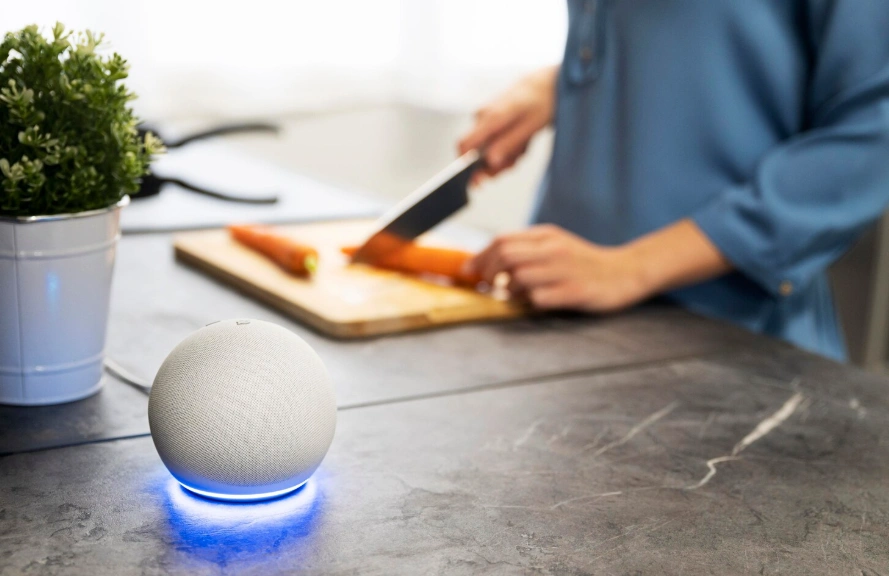
Advanced safety systems go beyond basic alarms, providing interconnected protection, smartphone alerts, and coordination with other home systems during emergencies.
Enhanced Features:
- Interconnected Alarms: When one detector activates, all alarms sound throughout the home.
- Remote Alerts: Receive notifications on your phone regardless of location.
- Voice Announcements: Clearly state the type and location of danger (smoke in kitchen, CO in basement).
- Self-Testing: Automatically run diagnostics and alert you to maintenance needs.
- Emergency Lighting: Trigger pathway lights to guide occupants to exits.
- HVAC Integration: Automatically shut down heating/cooling systems to prevent smoke circulation.
Life Safety Statistics:
Smart smoke detectors with interconnected capabilities significantly improve early warning times, providing crucial extra minutes that can mean the difference between safe evacuation and tragedy. The combination of local alarms and remote alerts ensures you’re aware of danger even when away from home.
The Importance of Professional Installation:
Whether it’s lighting, security systems, or thermostats, proper installation is key. While many smart devices claim to be DIY-friendly, creating a truly integrated smart home ecosystem that works reliably requires professional expertise. The difference lies not just in installing individual devices, but in ensuring they communicate seamlessly, operate efficiently, and remain secure from cyber threats.
Why Professional Installation Matters:
Network Infrastructure: Smart homes require robust, properly configured networks. Professional installers ensure adequate bandwidth, proper router placement, and secure network segmentation to keep devices operational and protected.
Device Compatibility: Not all smart devices work well together. Experienced installers know which brands and protocols integrate smoothly, preventing frustrating compatibility issues down the road.
Code Compliance: Electrical work, including smart switch installation and low-voltage wiring, must meet local building codes. Licensed electricians ensure installations are safe, legal, and properly documented.
System Integration: Professional installers create cohesive systems where devices work together intelligently rather than operating as isolated gadgets. This includes creating automation routines, scenes, and intelligent responses that make your home truly smart.
Security Configuration: Professionals implement proper network segmentation, change default passwords, keep firmware updated, and follow cybersecurity best practices to ensure your smart home is secure from hacking attempts.
Proper Placement and Optimization: From security camera coverage and blind spot elimination to smoke detector placement that follows building codes, professional installers ensure every device is optimally positioned for maximum effectiveness.
Long-Term Support: Professional installations come with ongoing support, troubleshooting, and system updates that keep your smart home running optimally as technology evolves.
Wolverine Low Voltage: Your Smart Home Partner in Michigan
Wolverine Low Voltage has been Michigan’s trusted partner for comprehensive smart home solutions. Serving Ann Arbor, Detroit, Grand Rapids, Lansing, and communities throughout the Michigian, we specialize in designing and installing integrated automation systems that enhance comfort, security, and efficiency.
Our expertise spans the complete smart home ecosystem, from initial consultation and system design through installation, testing, and ongoing support. Whether you’re looking to automate a single room or create a fully integrated whole-home system, our team has the experience and technical knowledge to bring your vision to life.
Learn more about our residential smart home solutions and discover how professional installation can transform your living space into an intelligent, responsive environment that adapts to your lifestyle.
Making Smart Home Automation Work for Your Lifestyle:
The most effective smart home isn’t necessarily the one with the most devices, it’s the one that seamlessly integrates with how you actually live. Here are key considerations when planning your home automation:
Start with Priorities: Identify which aspects of your home life would benefit most from automation. Is security your primary concern? Energy efficiency? Entertainment? Convenience? Focus your initial investment on areas that deliver immediate, meaningful benefits.
Plan for Scalability: Connected technology evolves rapidly. Design your system with future expansion in mind, ensuring the infrastructure can accommodate additional devices and capabilities as they become available or as your needs change.
Consider User Experience: The best automation happens invisibly. Focus on systems that anticipate needs and respond intuitively rather than requiring constant manual adjustments or complex programming.
Prioritize Reliability: A smart home feature that works 95% of the time is a frustration, not an asset. Invest in quality components and professional installation to ensure consistent, dependable operation.
Maintain Privacy & Security: Smart devices collect data about your habits and home. Work with professionals who understand cybersecurity best practices and can implement proper network segmentation, encryption, and access controls.
Future Trends in Smart Home Automation:
The smart home landscape is evolving rapidly, with several emerging trends shaping the next generation of automation:
- AI-Powered Predictive Automation: Future AI-driven assistants will learn from your habits, calendar, and even mood to adjust lighting, heating, and entertainment. These systems will adapt to your routines automatically without explicit programming, making your home smarter and more intuitive.
- Matter Protocol Adoption: The Matter standard, developed by Google, Apple, Amazon, and others, will create universal compatibility between smart home devices. This will simplify installation and ensure seamless integration, eliminating issues with incompatible ecosystems.
- Health & Wellness Integration: Smart homes will increasingly integrate health monitoring, such as air quality sensors, sleep tracking, and circadian rhythm optimization. These features will automatically adjust lighting and temperature for better sleep and overall wellness.
- Enhanced Energy Independence: Homes will generate, store, and manage their own power using solar panels, battery storage, and EV charging systems. Smart systems will predict energy needs and optimize power use, even selling excess energy back to the grid during peak demand.
- Voice & Gesture Control Expansion: Smart homes will evolve to recognize voice commands, gestures, and even facial expressions. For example, the system could detect stress from your posture and adjust lighting and music to create a calming atmosphere.
- Advanced Home Robotics: Beyond vacuums, robots will assist with deliveries, lawn care, and even elderly support. These robots will become essential elements in a fully automated home, increasing convenience and quality of life.
FAQs About Smart Home Automation Features:
What are the most essential smart home automation features for beginners?
Start with smart thermostats for energy savings, intelligent lighting for convenience, and smart locks for security. These features offer immediate benefits without overwhelming complexity.
How much does it cost to automate a home with smart features?
Costs range from $2,000-$5,000 for basic automation (thermostat, lighting, locks). Whole-home systems with advanced features can range from $10,000-$50,000 or more, but many pay for themselves through energy savings and increased home value.
Are smart home devices secure from hackers?
Properly configured devices with encryption and regular updates are secure. Working with professionals to ensure proper network segmentation and cybersecurity is key.
Can I add smart home features to an older home?
Yes, smart home features can be added to any home, including older ones, using wireless and battery-powered devices and expert retrofit solutions.
Do smart home devices work during power outages?
It depends on the device and backup power. Many devices, like smart locks and security cameras, work with battery backups or UPS systems to maintain functionality.
Will smart home features increase my home’s resale value?
Smart features can increase home value by up to 5%. Buyers expect modern automation, especially security and energy-saving features, and professionally installed systems are more appealing than DIY solutions.
Conclusion:
Home automation has moved from luxury to necessity, providing real benefits in security, energy efficiency, and convenience. Now is the perfect time to evaluate which features best suit your home and lifestyle.
Successful smart home integration requires careful planning, high-quality devices, and professional installation. By focusing on the features that matter most to you whether it’s security, energy savings, or convenience you can create a system that adds real value, not just novelty.
At Wolverine Low Voltage, we’ve spent over a decade helping homeowners integrate smart technology seamlessly into their lives.
Contact us today to schedule a consultation and see how professional automation can transform your home and future-proof your lifestyle.